
FOOD 105: FOOD WE EAT
So, What’s Actually on the Plate?
We’ve grown the food.
We’ve moved it through markets.
We’ve cooked it.
Now, finally, we get to eat.
Klas nan sesyon.
If you ask someone to picture a Haitian plate, chances are a few things immediately come to mind.
Rice.
Beans.
Plantains.
Meat.
Legim.
Maybe pikliz on the side.
But what Haitians actually eat tells us a much bigger story about the country—about geography, agriculture, economics, imports, history, and what a household can afford on any given day.
Because what we eat is shaped not only by what we like.
It is shaped by what is available and accessible to us.
There Is No One Haitian Plate
We talk about “Haitian food” as though there is one national menu. While rice and red beans—especially with locally grown rice—is often thought of as a quintessential Haitian meal, colloquially we call it riz national, meaning “national rice.” But there really isn’t one Haitian cuisine. And over the last 30 years, what and how Haitians eat has continued to evolve in response to climate and economic factors.
In true Haitian fashion, there is tremendous diversity.
What people eat varies by region, season, income, what grows nearby, what is available in the market, and what a family has access to. Haiti has distinct rainy seasons and tremendous variation in climate and agriculture from one region to another.
And different places are known for different foods.
You go to the Artibonite for lalo—jute leaves.
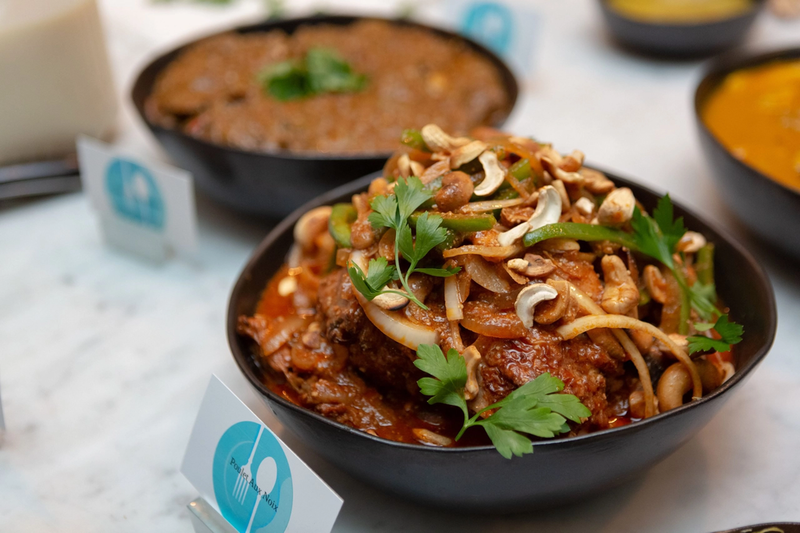
You go to the North for nwa ak poul—chicken with cashews.
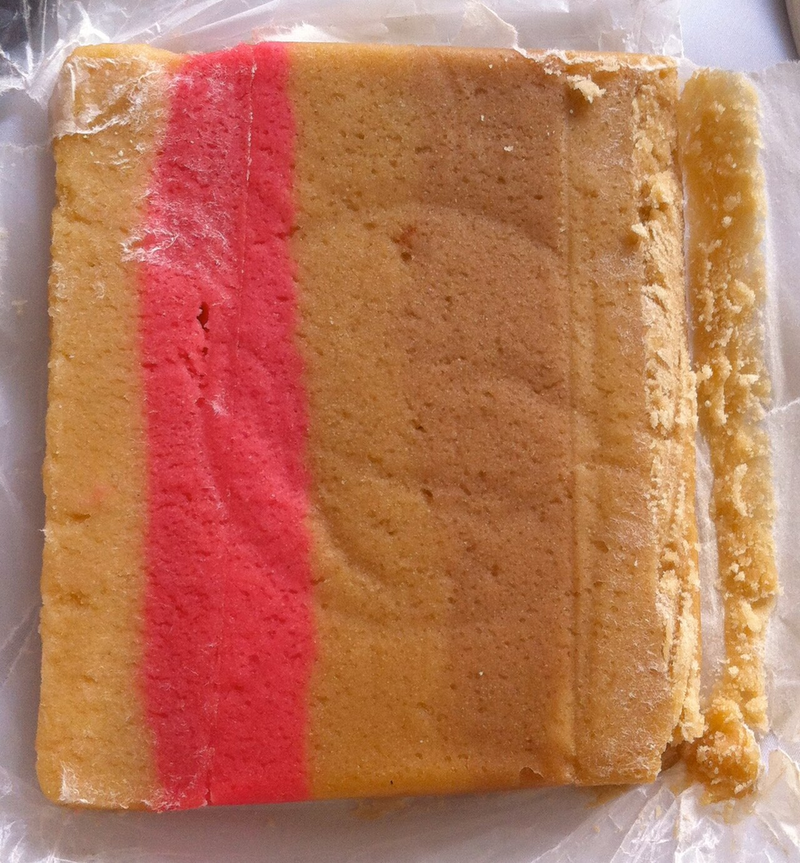
You go to the South for some of the best dous makòs (Haitian fudge)

You go to Jacmel for fish.
You go to the Central Plateau for freshwater fish.
You go near the airport for tablèt kokoye.
Along the coast, seafood may be much more common.
What We Grow and What We Import
Here is where the plate connects back to everything we’ve learned so far.
Some of what Haitians eat is grown in Haiti.
And some of it arrives from somewhere else.
As we learned earlier in this series, Haiti produces a significant share of its own food, particularly fruits, vegetables, roots and tubers, plantains, beans, and other crops.
But Haiti is also highly dependent on food imports.
Rice is perhaps the most familiar example.
Rice is grown in Haiti—most famously in the Artibonite Valley—and it is also imported in large quantities. This balance changed dramatically beginning in the 1990s, as trade policy decisions reduced protections on imported rice at the same time that Haiti’s domestic agricultural sector faced its own economic and environmental pressures.
So when you see rice on a Haitian plate, it could have been grown a few departments away or traveled thousands of miles before reaching the market. We have to remember that local and imported foods do not exist in completely separate systems. They meet each other in the same markets.
They compete on price. And when imported products can enter the market at prices local producers struggle to match, Haitian farmers and merchants face a very different competitive environment.
In the mid-1990s, Haiti sharply reduced tariffs on imported rice as part of broader trade liberalization. Rice tariffs fell from much higher protective rates to just a few percentage points, making Haiti one of the most open rice markets in the Caribbean.
The consequences of those decisions are still visible on Haitian plates today. And ultimately, a household standing in the market has to make a decision. Often, that decision is driven by cost.
Quick Facts
🍚 Haiti both produces and imports food, meaning locally grown and imported products often meet in the same markets.
🍚 Rice is both grown domestically—particularly in the Artibonite—and imported in significant quantities.
🍚 Haiti dramatically reduced tariffs on imported rice during the 1990s, reshaping the competitive environment for domestic rice producers.
🍚 Food security involves more than food being physically available. It also includes whether people can reliably access and afford nutritious food.
🍚 Household income, food prices, transportation, market access, climate, and insecurity can all influence what ultimately reaches a family’s plate.
🍚 Haiti’s food traditions draw on an enormous variety of grains, legumes, roots and tubers, fruits, vegetables, meats, seafood, herbs, and other locally available ingredients.
Lekòl lage.