
FOOD 103: FOOD WE SELL
The Food Has Been Grown. Now, How Does It Get Around?
In our last class, we left you with a mango. It had been planted, grown, harvested, and was ready to eat. But unless you happen to live next door to the mango tree, there is still a problem.
How does that mango get to you?
Klas nan sesyon.
To understand how food moves through Haiti, you have to understand the people who move it.
And in Haiti, many of those people are women.
You know them. You see them throughout our work at Fonkoze.
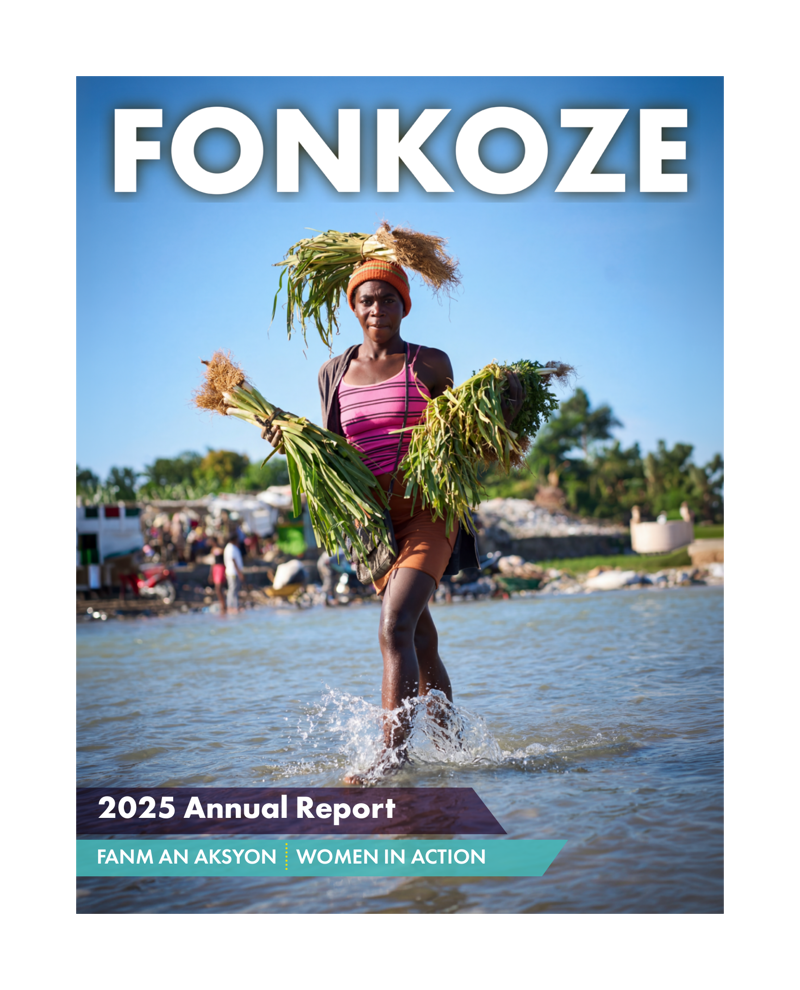
She’s the machann sitting behind a carefully arranged pile of tomatoes.
She’s the woman selling plantains along the side of the road.
She’s the vendor in the public market who already knows which beans you want before you ask.
She’s the Madan Sara.
Who Is the Madan Sara?
A Madan Sara is much more than a market woman.
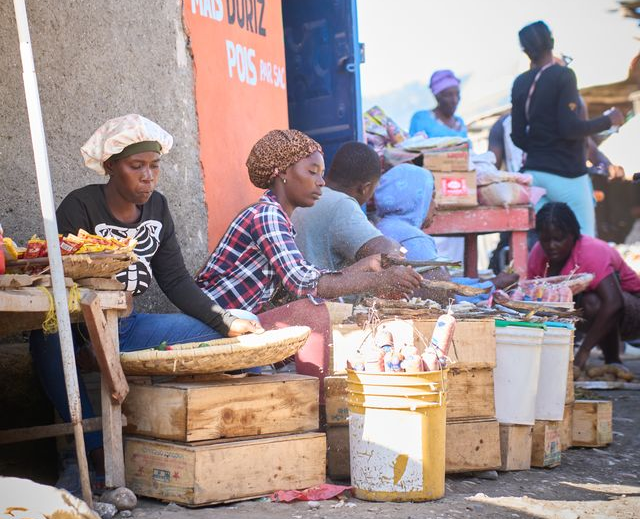
- She is a trader.
- A buyer.
- A distributor.
- A negotiator.
- A logistics operation.
- And, quite often, a financier.
Fun Fact Origin of the name “Madan Sara”: The women are named after the Village Weaver (Ploceus cucullatus), a small, highly social bird known in Kreyòl as madan sara. The birds gather together in large colonies, building their nests in the same trees and creating a constant buzz of activity and chatter. This chatter filled gathering is likened to the same sound the Madan Sara (the person) make when they are in community together.
Madan Sara travel into agricultural areas and purchase products directly from farmers. They aggregate what many small farmers grow, arrange transportation, carry those goods across Haiti, and sell them into larger markets or to other merchants who eventually sell them to consumers.
The World Bank has estimated that approximately 100,000 Madan Sara participate in the marketing of agricultural products in Haiti, although their numbers fluctuate with harvest seasons.
Remember what we learned in our last class: Haiti has more than one million mostly small farms.
If one farmer grows a relatively small quantity of beans, another has plantains, and another has avocados, someone has to connect all of those small producers to a market large enough to buy what they grow.
Very often, that someone is a Madan Sara. She’s the mover & the shaker of the Haitian economy.
A Supply Chain Hiding in Plain Sight
If we drew the journey of a locally grown mango, it might look something like this:
Farmer → Madan Sara → Machann → Consumer
Of course, Madan Sara are often machann themselves, so the system can get much more complicated than that.
A Madan Sara may purchase directly from a farmer before harvest. She may buy from several producers. She may transport products herself or pay someone else to move them. She may sell to another wholesaler, a machann chita, a neighborhood boutik, a restaurant, or directly to consumers.
And there can be other layers within the market itself.
You may encounter a gwo machann—a larger merchant dealing in greater quantities—and the ti ponyèt, a smaller intermediary who buys in smaller quantities and helps move goods through the market toward smaller retailers and consumers.
So our mango’s journey might actually look more like:
Farmer → Madan Sara → Gwo Machann → Ti Ponyèt → Machann → Consumer
And even that doesn’t capture every possibility.
Sometimes a Madan Sara may provide a farmer with an advance before harvest in order to reserve part of the crop.
And all of this requires money.
Before You Can Sell, Obviously, You Have to Buy
This is one of the most important things to understand about commerce—or, as we call it, komès.
A business can be profitable and still not have enough cash to operate. Imagine a Madan Sara knows that mangoes are ready for harvest. She knows where to buy them. She knows where she can sell them. She knows approximately what customers will pay.
Wonderful!
But first, she needs enough money to buy the mangoes.
Then she may need to pay for sacks or baskets, transportation, loading and unloading, market fees, food, lodging, and other expenses before she earns a single gourde from the sale.
Even in this informal setting, that money is still called working capital.
Access to working capital can determine how much a merchant is able to buy, where she can travel, how quickly she can replenish her inventory, and ultimately how much income her business can generate.
This is where access to financial services becomes part of the food system.
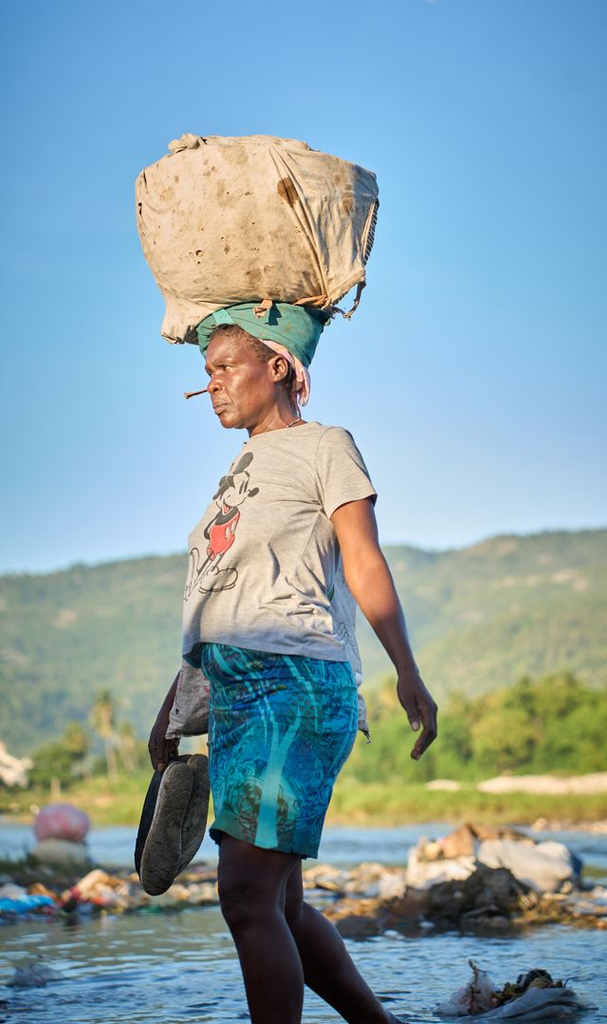
For women operating largely in the informal economy, traditional forms of financing can be difficult to access. Yet their businesses still need capital to function.
At Fonkoze, we understand this intimately because these are the women we have worked alongside for decades: women building businesses, managing inventory, navigating markets, borrowing, saving, investing, and using komès to support their families.
A loan to a market woman isn’t disconnected from agriculture.
It may be part of what allows a farmer’s harvest to reach the market at all.
The Market Is Infrastructure
When we hear the word infrastructure, we tend to picture roads, bridges, warehouses, ports, or electricity.
And Haiti certainly needs those things. Every country in the modern world requires continuous investment in its physical infrastructure.
But there is also human infrastructure.
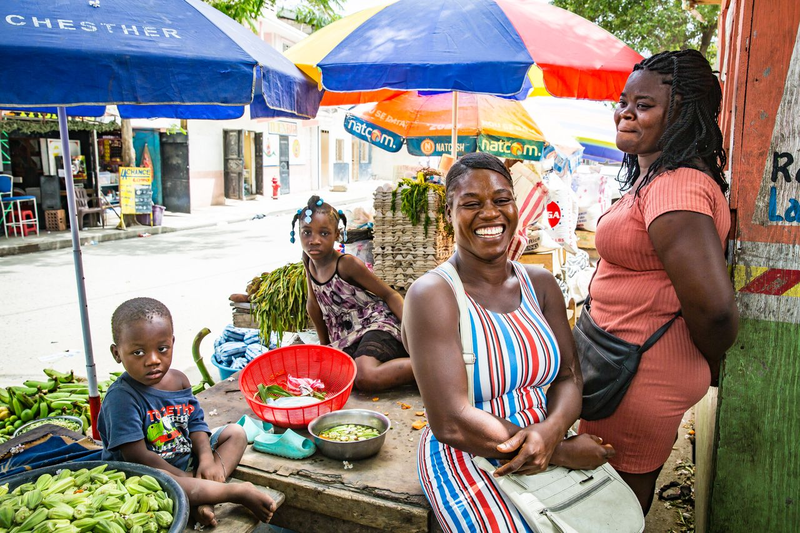
And this is where much of Haiti’s strength lies.
Haiti’s food markets function because thousands upon thousands of people have built networks connecting producers and consumers.
- They know who grows what.
- They know when something is ready.
- They know which markets need it.
- They know who will buy it.
- They know how much it should cost.
- And they know how to get it there.
That knowledge has enormous economic value.
In fact, nearly 90% of Haitian households purchase food at markets, where locally produced and imported foods meet.
Most of this commerce does not happen through enormous supermarket chains or national distributors.
It happens through Haiti’s informal economy.
The word informal can sometimes make a system sound disorganized—or even suggest that there is no system at all.
But look again.
Many of the formalities are there. They simply aren’t accounted for in the places we traditionally expect to find them.
There are roles, hierarchies, relationships, financing arrangements, distribution networks, and rules about who buys from whom.
Within all of that is specialized knowledge, built over years and held together by trust.
That is the power of cultural currency and networks.
A farmer has a product.
A Madan Sara aggregates products from multiple farmers.
Transportation is arranged.
Goods travel to another market.
A gwo machann may purchase a large quantity.
A ti ponyèt may divide that quantity further.
A machann purchases inventory.
And eventually, someone buys dinner.
That is a system.
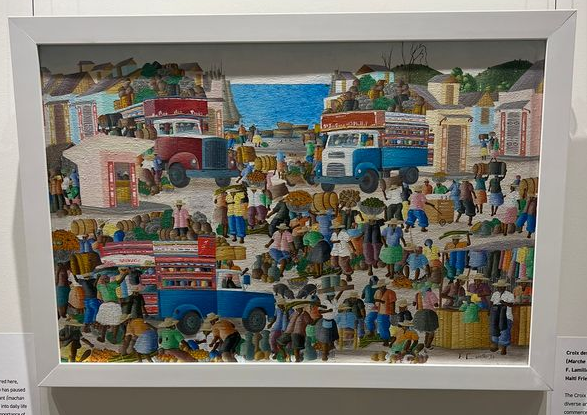
Quick Facts
🧺 The World Bank has estimated that approximately 100,000 Madan Sara participate in marketing Haitian agricultural products, with the number varying by harvest season.
🧺 Madan Sara help aggregate food from small producers and transport it to consumer markets.
🧺 Haiti’s market system includes different kinds and scales of merchants—from Madan Sara and gwo machann to ti ponyèt and retail machann.
🧺 Some Madan Sara purchase crops directly from farmers and may even provide advances before harvest to secure products.
🧺 The amount a merchant can trade depends heavily on her access to working capital.
🧺 Nearly 90% of Haitian households purchase food at markets, making markets central to how Haitian families access food.
Lekòl lage.