
Architecture105: Gingerbread Houses
Haiti’s Ornate Architecture of Air, Light, and Adaptation
Klas la nan sesyon.
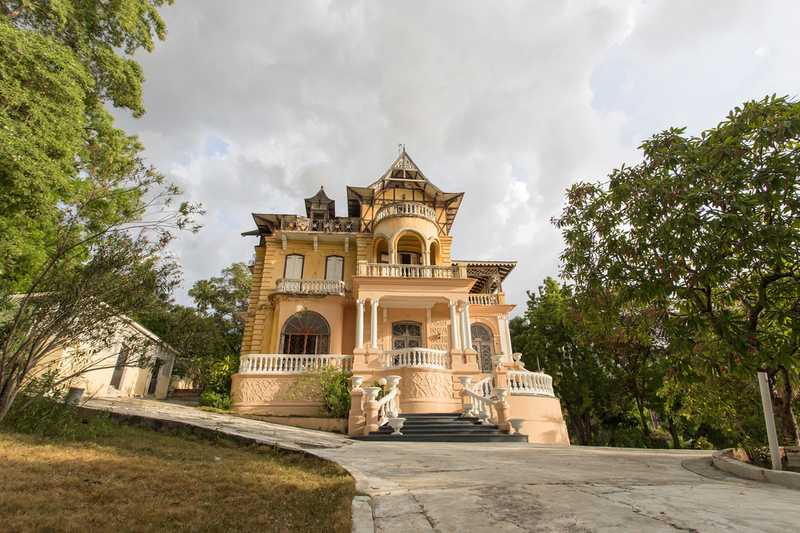
Among the most iconic forms of Haitian architecture are the country’s famous Gingerbread houses — large, decorative homes known for their intricate woodwork, tall roofs, colorful façades, and elaborate galleries and balconies.
In Haiti itself, people do not usually refer to these homes as “Gingerbread houses.” Colloquially, many people simply call them ansyen kay (“old houses”), bèl kay (“beautiful houses”), or refer to them by the neighborhood or family associated with them.
The term Gingerbread was popularized later by foreigners and American tourists in the 1950s because the decorative wood trim reminded them of the ornate icing found on Victorian gingerbread houses in the United States.Which mirrored how this gothic inspired architectural style is called.
Today, these homes are considered cultural landmarks and part of Haiti’s national architectural heritage. So much so that they have been recently targeted by the movement of violence enveloping the capital.
A Caribbean Architectural Language
Although Gingerbread architecture is strongly associated with Haiti, similar architectural styles appear throughout the Caribbean.
Versions of these homes can be found in places such as:
- Trinidad and Tobago
- Jamaica
- Cuba
- Dominican Republic
- Martinique
- Guadeloupe
This is because Caribbean architecture developed through centuries of exchange between Europe, Africa, the Americas, and the tropical environment of the region itself.
The Haitian style emerged between the 1880s and the 1920s and combined:
- Victorian influences
- French Caribbean architecture
- Haitian craftsmanship
- tropical climate adaptation
- and local artistic traditions
Architectural manuals circulated from Europe and North America during this period, while Haitian architects studied abroad — particularly in France — and returned home with new architectural ideas.
At the same time, French artisans established woodworking workshops in Haiti that trained Haitian craftspeople, whose carving, fretwork, and decorative detailing became central to the style.
This is where you can see the originality in the Haitian homes. Rather than copying European architecture directly, Haitian architects transformed those influences into something adapted specifically for Caribbean life.
Architecture Designed for the Caribbean Climate
The Gingerbread house is a powerful example of climate-smart Caribbean architecture.
Long before air conditioning, Haitian architects and builders designed homes that responded intelligently to tropical heat, humidity, earthquakes, and heavy rains.
These homes were often built with:
- tall ceilings to release heat
- steep roofs and turrets to redirect hot air upward
- large windows and doors for airflow
- louvered shutters instead of sealed glass windows
- wraparound galleries and verandas for shade
- flexible timber frames that could better withstand tremors and storms
- deep porches that protected interiors from rain and sun
Thus the homes breath naturally.
Air moved continuously through the structure, helping cool interiors during the hottest months.
After the 2010 earthquake, many Haitians noted that some Gingerbread homes survived better than newer concrete structures because of their flexibility and lighter framing systems.
This shifted local perceptions of the style. Before 2010, some people associated these homes mainly with elitism, colonial influence, or the old upper classes of Port-au-Prince. After the earthquake, many began to see them differently — as examples of resilient Caribbean engineering and intelligent environmental design.
The Rise of the Style in Haiti
The movement began during the late 19th century, particularly after the construction of Haiti’s second National Palace under President Lysius Salomon in 1881.
Soon after, private villas began adopting the style, including what would later become the famous Hotel Oloffson.
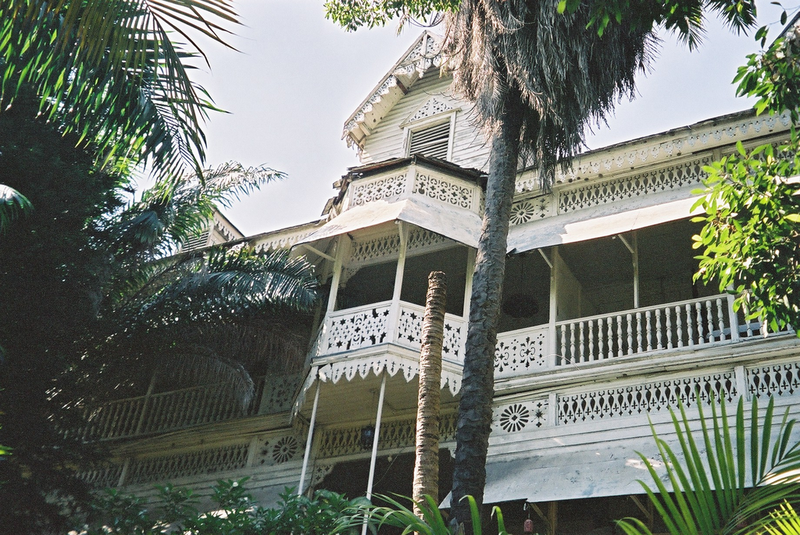
By Ketounette – Own work, CC BY-SA 3.0, https://commons.wikimedia.org/w/index.php?curid=18958165
In 1895, three young Haitian architects:
- Georges Baussan
- Léon Mathon
- Joseph-Eugène Maximilien
traveled to Paris to study architecture and returned inspired to further develop the emerging style.
Neighborhoods such as:
- Pacot
- Turgeau
- Bois-Verna
became known for their large and elaborate Gingerbread homes.
The style later spread throughout Haiti, including:
- Saint-Marc
- Jérémie
- Les Cayes
- Petit-Goâve
- Léogâne
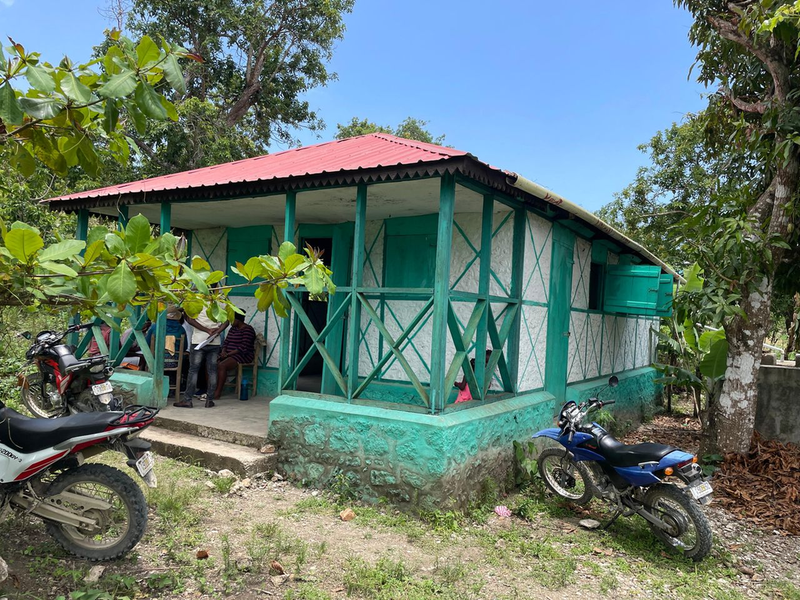
It also has filtered down into smaller homes that are one level and prolific throughout the country. The staples of the architecture executed on a smaller scale, think shutters, ornate metal work, wood trimmings, and shingles.
Cultural Memory and Violence
Today, Gingerbread houses hold enormous cultural and emotional significance in Haiti. The destruction of these homes carries emotional weight far beyond architecture itself.
During the ongoing crises in Haiti, several historic Gingerbread structures have been damaged, occupied, or burned by armed groups, including the destruction of Hotel Oloffson and Villa Miramar during the violence surrounding the Haitian political crisis.
For many Haitian people, these attacks feel like attacks on cultural memory itself.
Artistry in the Details
One of the most striking features of Gingerbread houses is their craftsmanship.
These homes often included:
- hand-carved wood trim
- decorative fretwork
- ornate balconies
- colorful painted exteriors
- patterned floor tiles
- ironwork
- turrets and towers
- large entry staircases
- stained glass details
Even practical architectural elements were treated artistically.
Windows, vents, railings, and rooflines became spaces for beauty and creativity.
This reflected a broader Haitian tradition in which artistry is woven into everyday life rather than separated from it.
Gingerbread architecture reminds us that Haiti has long possessed sophisticated traditions of engineering, design, urban planning, and craftsmanship — realities that are often overlooked in outside portrayals of the country.
Lekòl lage.