Architecture 107: Historic Structures
What Haiti Built, What Survived, and What We Lost
Klas nan sesyon.
If you walked through downtown Port-au-Prince before January 12, 2010, you encountered a very different architectural landscape.
The National Palace, cathedral, ministries, municipal buildings, schools, markets, commercial buildings, and private homes created a civic center that reflected different periods of Haitian history.
The earthquake did not only take lives and homes. It also dramatically altered Haiti’s architectural landscape.
And Port-au-Prince is only part of the story.
Across Haiti, historic architecture remains hidden in plain sight: iron markets, churches, customs houses, warehouses, schools, old government buildings, commercial districts, plantation ruins, and entire historic streetscapes.
Some are protected. Some have been restored. Some are used every day without being thought of as “historic.”
In today’s lesson we’ll cover just a few.
The National Palace
Haiti has actually had several National Palaces, with earlier buildings destroyed by political upheaval and explosions.
The palace most people remember was designed by Haitian architect Georges Baussan and completed in 1920. Its enormous white façade, central dome, and position at the Champ de Mars made it one of the most recognizable buildings in Haiti.
It collapsed during the 2010 earthquake.
For generations, the National Palace had been part of the visual identity of Port-au-Prince. Its loss changed not only the government complex, but the physical landscape of the capital itself.
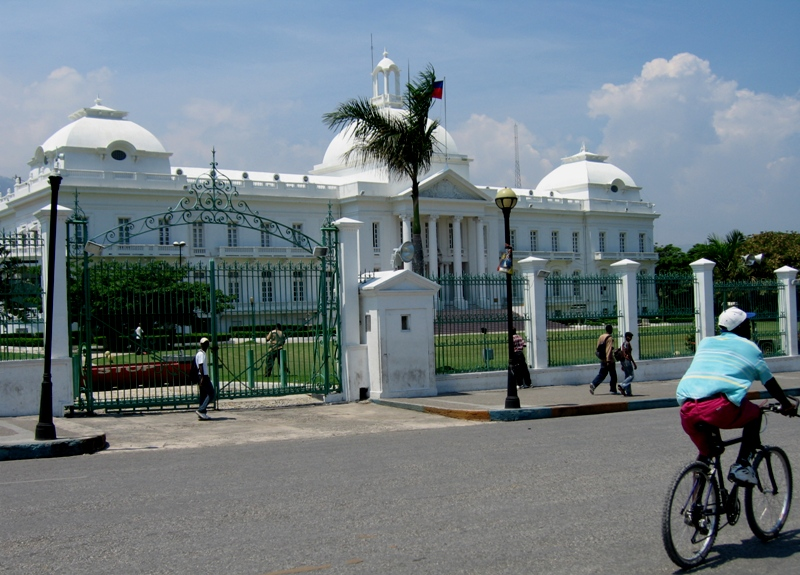
Par MichelleWalz (Michelle Walz Eriksson) — Haiti – Presidential Palace, CC BY 2.0, https://commons.wikimedia.org/w/index.php?curid=1028008
The Cathedral
The Cathédrale Notre-Dame de l’Assomption was another defining feature of downtown Port-au-Prince.
Completed in the early 20th century, its towers rose above the surrounding city and made the cathedral a major visual landmark.
Much of the cathedral collapsed during the 2010 earthquake, leaving its façade and portions of its walls standing.
Its ruins became one of the most recognizable images of how dramatically the earthquake altered the city’s historic center.
Marché en Fer
Not all historic architecture is governmental or religious.
The Marché en Fer, or Iron Market, represents something equally important: commerce.
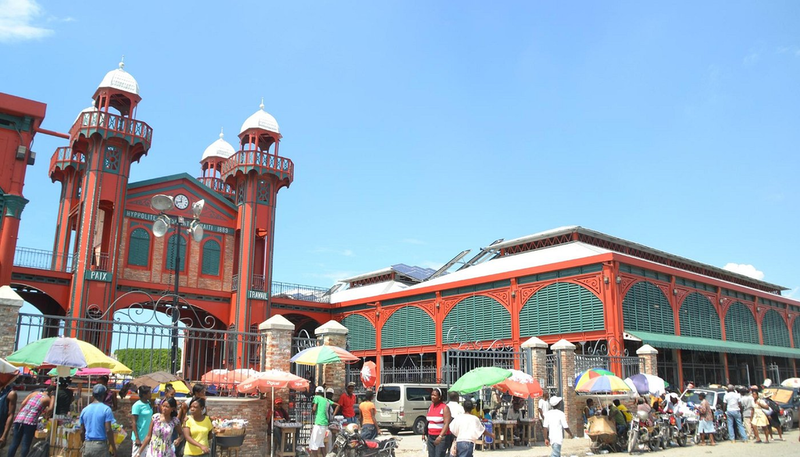
The enormous iron structure became one of Port-au-Prince’s most recognizable markets, filled with vendors selling food, household goods, crafts, religious objects, and almost everything in between.
The market survived more than a century of fires, political change, and natural disasters. It was badly damaged before and during the 2010 earthquake and later restored.
Its history reminds us that a historic building does not have to be a palace or monument. It can also be a place where ordinary people have worked, traded, and gathered for generations.
Custom Houses, Warehouses, and Ports
Haiti is surrounded by water, and for much of its history its ports connected local economies to one another and to the rest of the world.
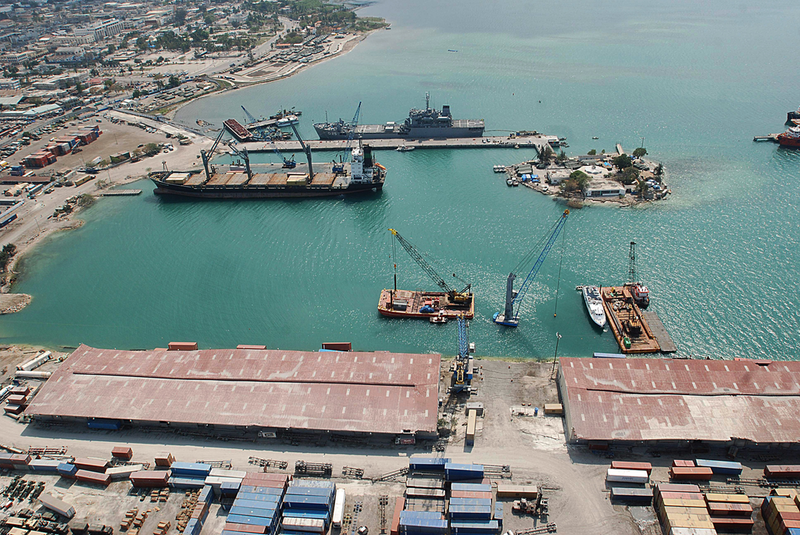
By U.S. Navy photo by Mass Communication Specialist 2nd Class Meranda Keller – This image was released by the United States Navy with the ID 100221-N-5787K-004 https://commons.wikimedia.org/w/index.php?curid=10326904
Port-au-Prince developed into the country’s principal commercial port, with docks, warehouses, customs facilities, transit sheds, paved cargo areas, and eventually infrastructure designed for container shipping. Cap-Haïtien became another major international port serving the north. Around the country, ports and landing places including Saint-Marc, Jérémie, Port-de-Paix, Gonaïves, Miragoâne, and others have supported coastal or international trade at different points in Haiti’s history.
Not every Haitian port looks like a modern container terminal. Historically, many smaller ports had relatively simple wharves, warehouses, customs buildings, and open areas where cargo could be loaded, inspected, stored, and taxed. Coastal shipping also connected communities that were difficult to reach over land.
Their architecture tells another part of Haiti’s history: what the country produced, imported, exported, taxed, and traded.
Railroads
Haiti once had both passenger railroads and industrial railways.
Rail transportation began in the late 19th century. Port-au-Prince even had streetcars, while longer lines eventually connected places including Port-au-Prince and Léogâne, Port-au-Prince and the Cul-de-Sac plain, Port-au-Prince and Saint-Marc, and Cap-Haïtien toward Grande-Rivière-du-Nord and Bahon.
Other lines served sugar and agricultural operations, carrying cane and other products between plantations, factories, towns, and ports.
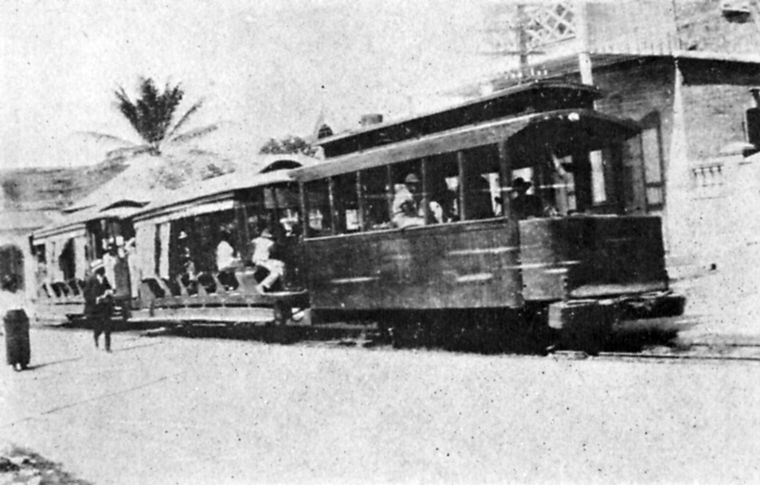
By Unknown author – NYPL galerie photographique, Public Domain, https://commons.wikimedia.org/w/index.php?curid=9465717
The system never developed into the nationwide network once imagined. Lines closed at different times as finances, ownership, transportation priorities, roads, automobiles, and the industries the railroads served changed. Port-au-Prince’s tram system closed in 1932, while portions of Haiti’s rail infrastructure continued operating into the mid-20th century and some industrial lines lasted longer.
Today Haiti has no functioning railway.
But the railroad has not completely disappeared.
Old rails, pieces of track, bridges, stations, and fragments of railway infrastructure can still be encountered around the country — almost like tombstones marking a transportation system that once existed there.
Old Sugar Works
Long before the modern factory, producing sugar required an entire architectural system.
The colonial habitation sucrière was not simply a field surrounding a large house. It was an agricultural and industrial complex designed around the production of sugar through enslaved labor.
A large sugar habitation could include an aqueduct bringing water to the site; animal-powered or water-powered mills for crushing cane; a chaufferie where cane juice was boiled; a purgerie and étuve where sugar was processed and dried; warehouses and workshops; the owner’s grande case; housing; and the surrounding agricultural land.
There could also be a guildiverie.
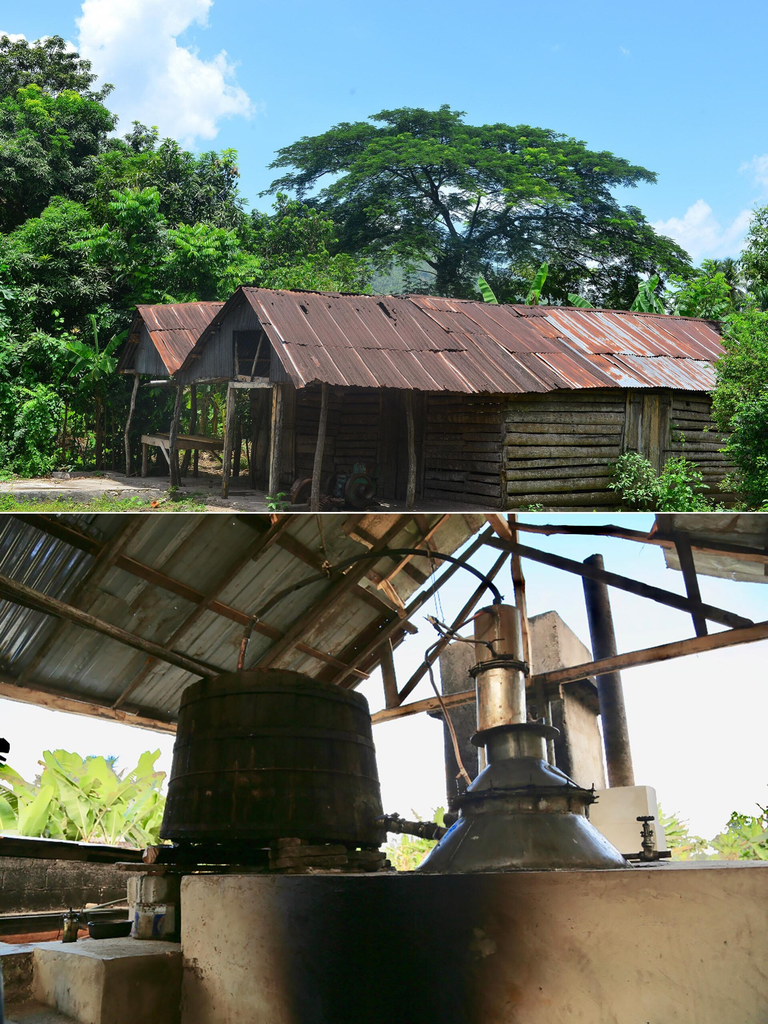
Source: How Haiti is Making Some of the Best Rum on Earth, By Tammie Teclemariam: https://www.wineenthusiast.com/culture/spirits/haiti-clairin-rum/
The guildiverie (gildiv in Haitian Creole) was the distilling operation where sugar-cane byproducts and syrup could be transformed into tafia — connecting the architecture of the colonial sugar plantation directly to the history of the spirits that would eventually become part of Haiti’s kleren and rum traditions.
The remains of these complexes are still scattered through the Haitian countryside. At places such as the former Jumécourt sugar habitation near Croix-des-Bouquets, substantial pieces of aqueducts, mills, masonry buildings, an étuve, and other structures have survived.
These ruins are complicated historic structures. They demonstrate sophisticated agricultural and industrial engineering, but that system was built to extract enormous wealth through the forced labor of enslaved people.
They are physical remains of the economy that made colonial Saint-Domingue extraordinarily wealthy — and of the system Haitians ultimately overthrew.
Schools and Educational Architecture
Schools are another piece of Haiti’s architectural landscape that can be so familiar we stop noticing them.
In Port-au-Prince, generations of students know schools by names that are almost geographic shorthand. Collège Saint-Louis de Bourdon is commonly known as Mère Bourdon, while Sainte-Rose de Lima is commonly called Mère Lalue. There are also large institutional campuses such as Canado.
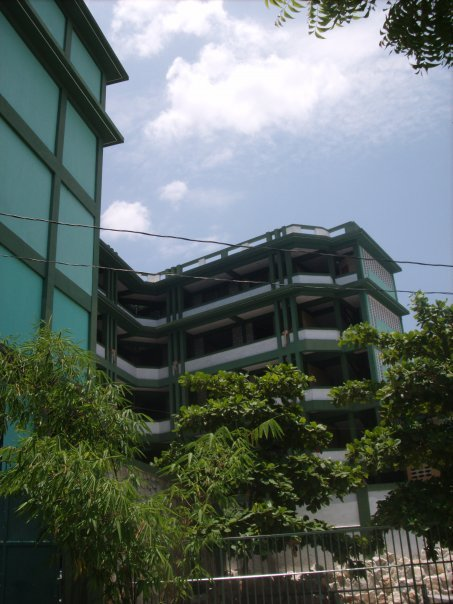
By wspl – Own work, Public Domain, https://commons.wikimedia.org/w/index.php?curid=7506880
Many of these older schools occupy substantial compounds: classroom buildings arranged around courtyards, long galleries and corridors, chapels, administrative buildings, playgrounds, gardens, walls, and gates. The courtyard itself can become one of the defining spaces of school life.
Outside the capital, school architecture takes many other forms.
Travel through provincial towns and the countryside and school buildings appear everywhere: old religious schools, public écoles nationales, modest concrete schools, wooden schoolhouses, classrooms beside churches, and small rural structures serving communities far from major towns. Haiti’s current school registers still reflect this mixture of national, communal, congregational, presbyteral, evangelical, and independently established schools throughout rural communities.
They are part of Haiti’s architectural heritage not because every school is architecturally grand, but because architecture is also the collection of everyday buildings through which people experience their communities.
Cap-Haïtien City
Sometimes the historic structure is not one building, but an entire cityscape.
Cap-Haïtien retains streets lined with historic buildings, balconies, shutters, galleries, courtyards, and narrow streets that reflect different periods of the city’s development.
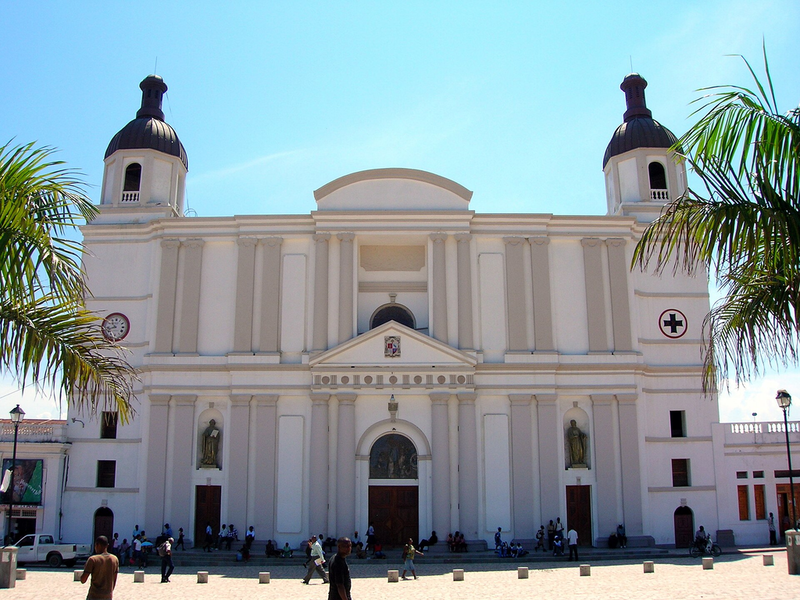
By Rémi Kaupp – Self-photographed, CC BY-SA 3.0, https://commons.wikimedia.org/w/index.php?curid=1575479
Walking through the city allows you to see how architecture works together. Individual buildings create a larger streetscape, and that streetscape becomes part of the identity of the city itself.
Jacmel City
Jacmel offers another example of architecture shaped by commerce, migration, and the Caribbean.
Its historic center includes 19th-century homes and commercial buildings connected to the city’s history as an important port. Balconies, ironwork, galleries, warehouses, and colorful façades create an architectural character distinct from both Port-au-Prince and Cap-Haïtien.
Jacmel reminds us that there is no single historic Haitian architectural landscape. Different cities developed their own identities based on geography, trade, wealth, migration, and local building traditions.
History Hidden in Plain Sight
These are only some of the best-known examples.
Across Haiti are old schools, churches, government buildings, customs houses, warehouses, markets, industrial structures, plantation remains, and homes that tell pieces of the country’s architectural story.
Some have been carefully preserved.
Many have not.
Architecture gives us a physical record of what Haiti has been. When those buildings disappear, part of that record disappears with them.
Lekòl lage.