Folklore 205: Kalson Wouj, Origin Stories
Kalson Wouj The Ones Who Stayed
Before we get into this, you need to understand something about stories of cosmology. They are origin stories, and because Haiti is shaped by three cultures, our folktales reflect that.
Most often they are rooted in West African lore, but this particular story is a Taíno folktale that, as far as we know, still largely lives in oral tradition.
It’s how Haiti’s national bird came to be. Kalson Wouj (Kanson Wouj)—yes, this does translate to “red underpants” or “red trousers” in English. And it’s because the bird looks as if it is wearing red underpants.
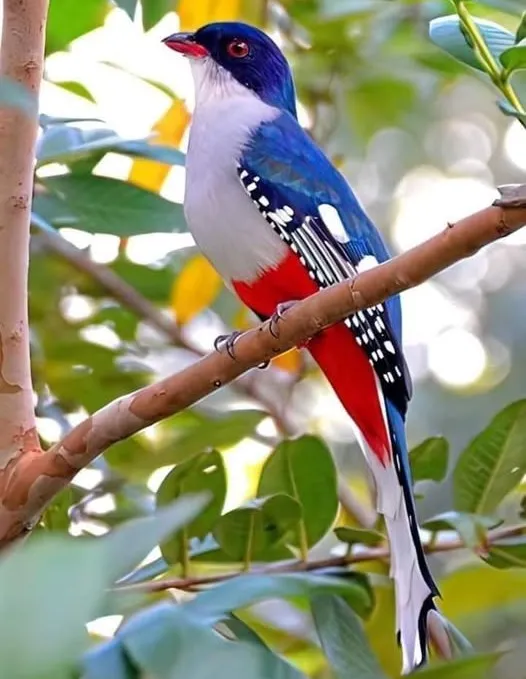
Its true name is the Hispaniolan Trogon (Priotelus roseigaster), also known as cacos. In Haitian history, the Cacos were bodies of armed men originally drawn from the country’s formerly enslaved population who came to wield power in Haiti’s mountainous regions following the victory of the Haitian Revolution in 1804. The nickname “cacos” was derived from local terms for the red-plumed Hispaniolan trogon because the insurgents “used to hide, like the bird of the same name, under the leaves so as to come unexpectedly upon and attack their enemy.” The term was later repurposed during the U.S. Occupation of Haiti to describe the peasant-led resistance fighters who opposed the occupation.
This is a lesser-known folktale and not really a folktale that is a drawn out story, so below is an interpretation on the folklore that is more or less, a short explanation vs a full story.
Klas la nan sesyon.
The Tale
Krik?
Krak!
Long ago, before plantations, before the name “Caribbean,” the island of Ayiti was home to the Taíno people.
They lived close to the land, guided by ancestral spirits. Their chiefs were not just leaders, but protectors and keepers of culture and memory.
Then ships appeared on the horizon.
The Spaniards had come. And it became clear they had not come in peace.
The Taíno chiefs gathered beneath the sacred ceiba tree. They fought fiercely, but the Spaniards carried weapons they had never seen before.
Knowing their bodies would not survive, the chiefs called out to their ancestors:
If our bodies cannot survive this war,
let our spirits remain.
Give us another way to protect our people.
And the ancestors answered.
Their bodies transformed.
Arms became wings.
Roucou turned to red feathers.
Jagua to blue-gray.
They rose into the air as birds.
Guardians.
Still watching.
Still guiding.
Kalson wouj.
They remained in the forests, high in the mountains, watching over the land as it changed.
They never left.
They simply learned how to fly.
And if you see a kalson wouj,
it is a reminder:
Something stayed to protect the people of Ayiti.
What is the Meaning of the Story?
To this day, people will say this bird is not actually endangered—it is rare because there were simply never that many to begin with.
So this story is about:
protection
transformation
and what it means to remain (in this case forever) out of the deepest bounds of love.
Lekòl lage!