Watch: Haiti Beyond the Playbook: Rethinking What Works in Fragile Contexts | Skoll Week 2026 Oxford Sidebar Session
Click to watch:
Fonkoze partnered with The Sidebar during Skoll Week 2026 in Oxford, UK, to host a practitioner-led panel conversation held alongside the Skoll World Forum. The Sidebar format is designed to create an inclusive and innovative space for candid, off-stage dialogue among funders, practitioners, and social impact leaders working across global development.
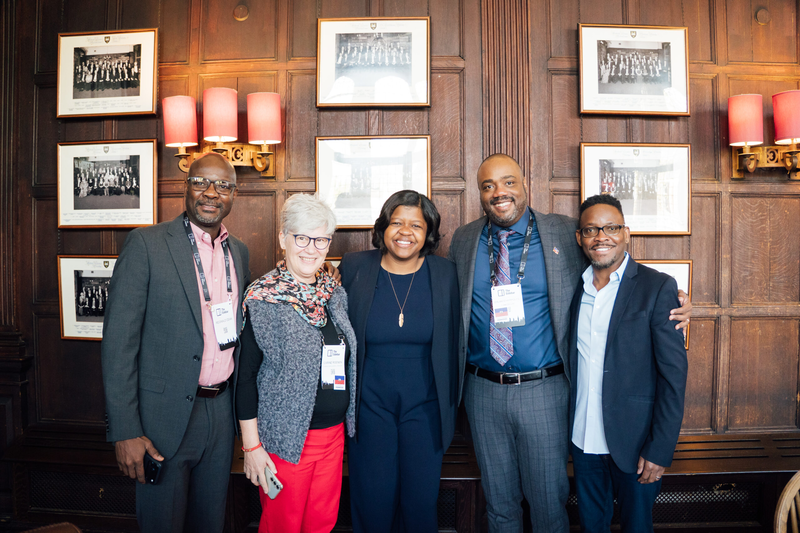
This session, titled “Haiti Beyond the Playbook: Rethinking What Works in Fragile Contexts,” brought together leaders, partners, and changemakers committed to deeper conversations about Haiti, partnership, and long-term systems change.
Rather than focusing on conventional development frameworks, the discussion centered on a shared question: what works in fragile contexts where imported models often fail to reflect local realities?
A consistent message emerged throughout the conversation: sustainable solutions are strongest when communities are trusted to lead. As Nedgine Paul Deroly shared, after years of listening and learning, the guiding question became: “When are we at our best?” The answer reflected a clear shift—organizations are strongest when they build from culture, community knowledge, and local realities, rather than applying external models not designed for these contexts.
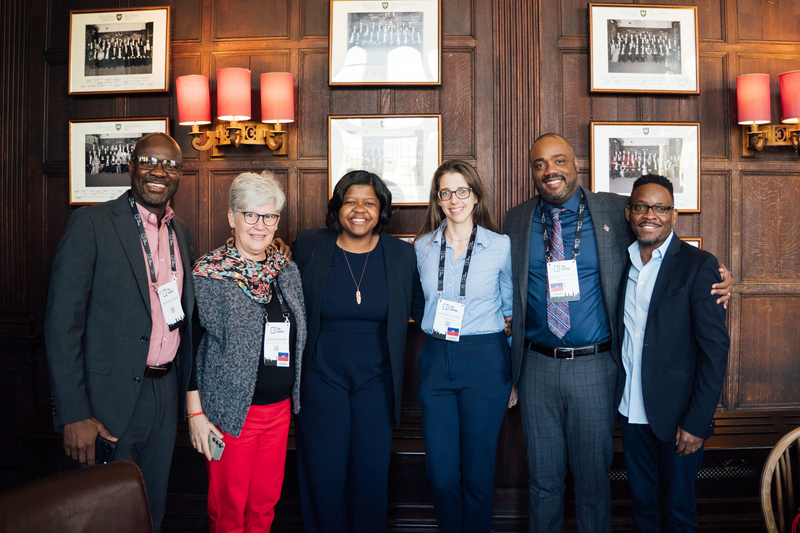
The conversation featured:
- Moderator: Dr. Erlantz Hyppolite, Executive Director, Fonkoze USA
- Carine Roenen, Executive Director, Fonkoze Foundation
- Nedgine Paul Deroly, Co-founder and CEO, Anseye Pou Ayiti
- Pierre Noël, Executive Director, Haiti Development Institute
Speakers shared grounded reflections on what it takes to work in environments defined by complexity and uncertainty. These included real-time program adaptation, difficult institutional decisions, and the ongoing challenge of balancing responsiveness with long-term commitment.
Carine Roenen emphasized the importance of honest dialogue around risk—identifying what the risks are, who carries them, and how partners can share responsibility rather than shifting it onto local organizations alone.
Pierre Noël underscored the importance of moving beyond short-term aid toward long-term investment in infrastructure, institutions, and systems capable of supporting generational change.
Rather than presenting linear success stories, the discussion focused on adaptation, iteration, and shared accountability under constraint, where conditions change faster than planning cycles can respond.
A key insight emerged clearly: Haiti is not only a context for development implementation—it is a source of development knowledge. Haitian-led organizations are generating practical, transferable expertise on how to operate effectively in fragile and rapidly changing environments.
The session also reinforced the importance of continued learning and relationship-building. For those newer to Haiti, Nedgine encouraged deeper engagement with peers and funders who have remained committed to Haitian leadership over time—especially in systems that have too often operated inequitably.
Interactive elements, including live audience polling, helped surface who was in the room and created space for connection between funders, practitioners, and partners working across different geographies and sectors.
We are grateful to everyone who joined us at The Sidebar in Oxford and contributed to this important conversation.
We invite continued engagement with Fonkoze and Haitian-led approaches advancing financial inclusion, education, health, and pathways out of poverty across Haiti. We welcome further conversation, partnership exploration, and shared learning grounded in trust, dignity, and long-term commitment.