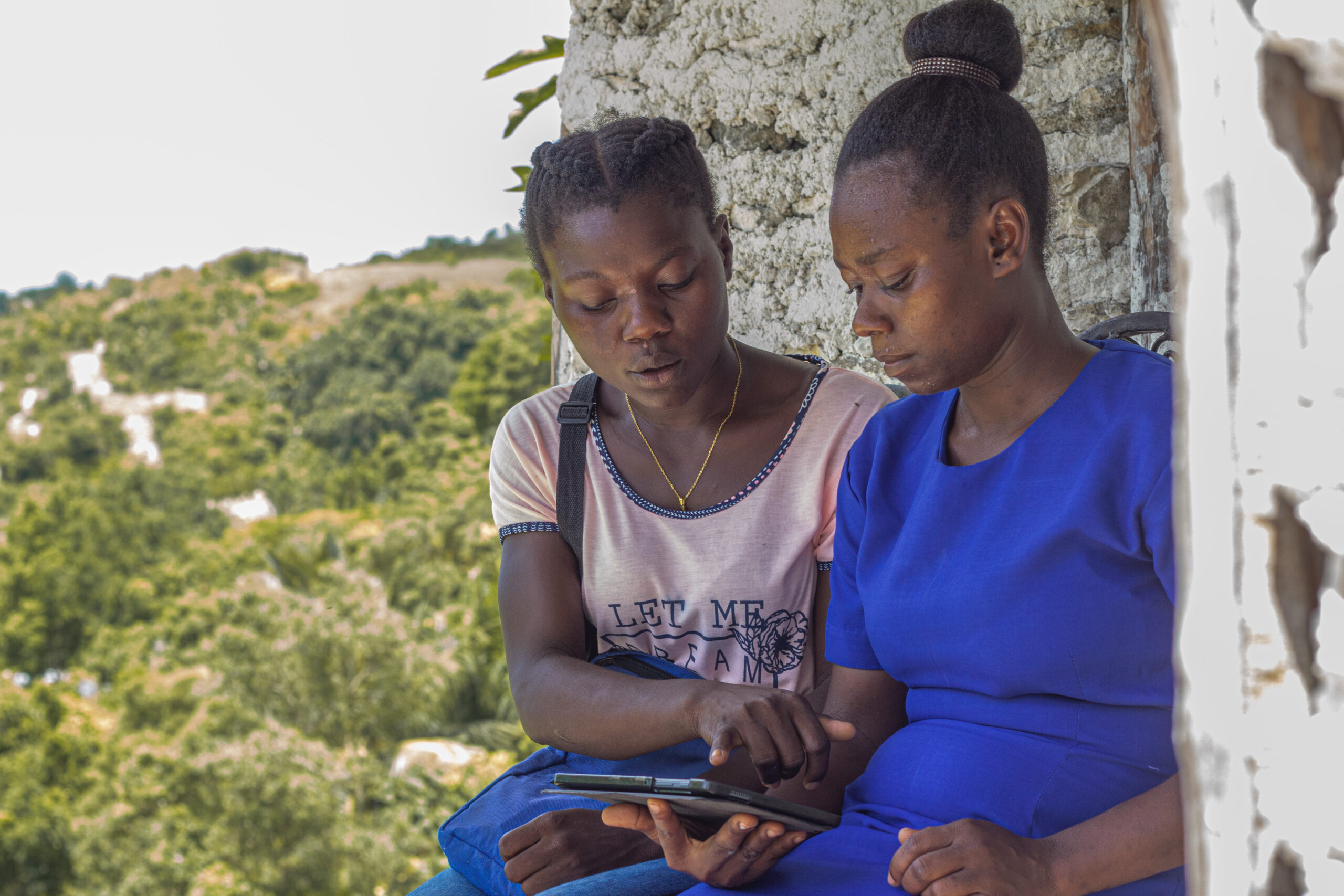
Fonkoze’s EdTek platform delivers interactive, tablet-based education that strengthens livelihoods, builds leadership, and supports economic resilience in communities where traditional schooling is limited.
Over 40% of Fonkoze’s microcredit clients are illiterate when they join the program. Limited education makes it harder for Haitian women to manage household finances, grow businesses, and recover from shocks such as natural disasters or socio-political instability.
Launched in 2021, EdTek helps lower these barriers by providing tablet-based, peer-supported learning in Haitian Creole, requiring no prior technology experience or literacy. Fonkoze provides tablets at no cost to participants.
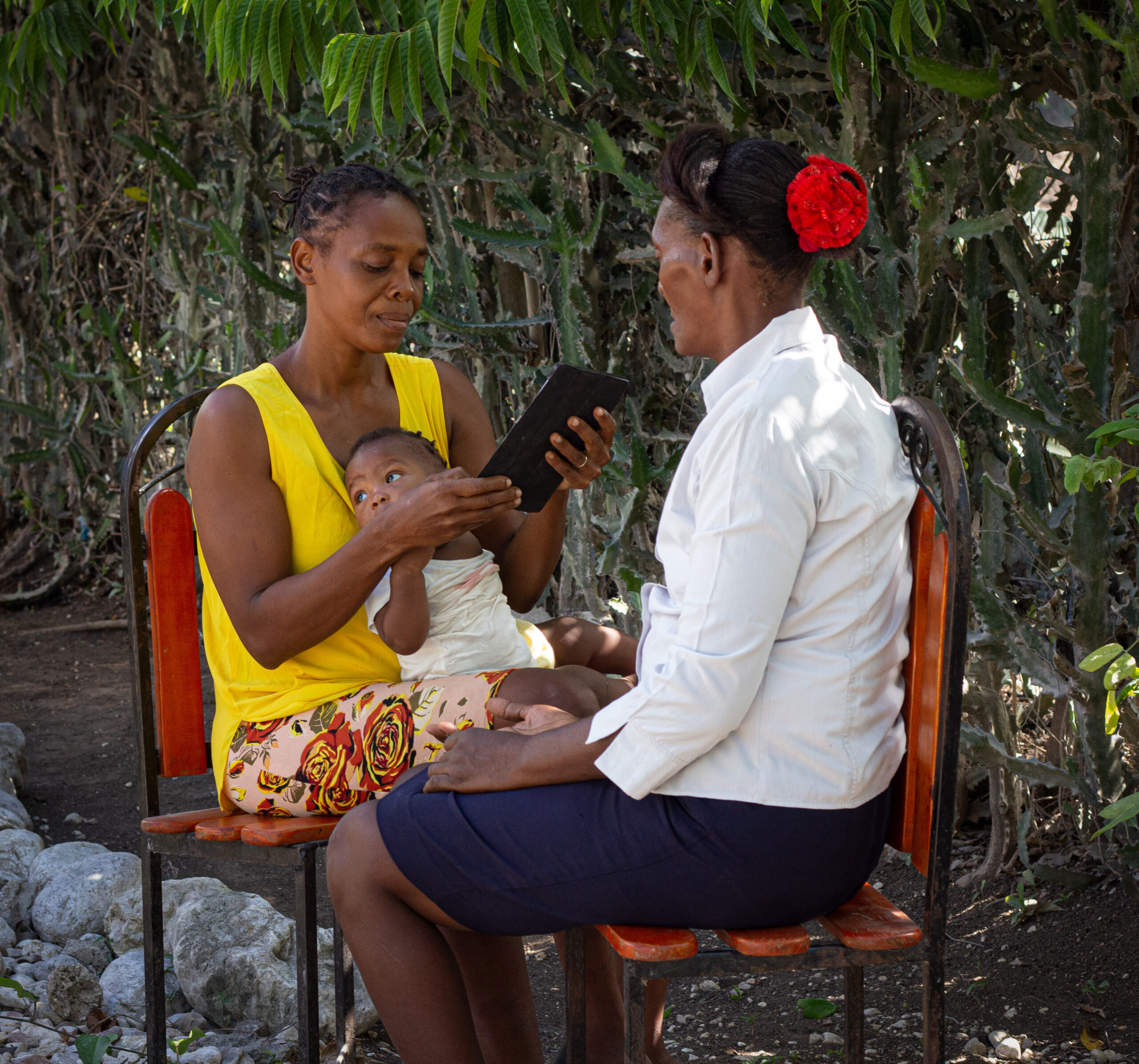
Fonkoze’s adult education programs strengthen economic resilience by equipping Haitian families with skills to meet basic needs and build sustainable livelihoods. Through EdTek, participants:
“EdTek gave me the confidence and knowledge to manage my business and care for my family.”
– EdTek Participant
individuals have been reached through the EdTek program since it’s launch
people, mostly women, participated in LISTA or EdTek digital education modules in 2025
new agriculture modules have been developed
of EdTek Participants now save regularly
reduced their debt through better credit management
Peer-led: Facilitated by trained community members or field agents
Group-based: Delivered within VSLAs, Solidarity Groups, or trusted community networks
Tablet-based & offline: Accessible in remote areas without internet
Specialized modules deepen training in savings, entrepreneurship, and life planning, including LISTA and EdTek Jesyon Biznis.
Personal Finance and Budgeting
Business Development and Enterprise Management
Interpersonal Relationships and Leadership
Sexual and Reproductive Health
Disaster Risk Reduction
Fonkoze’s programs are designed to create lasting, practical change in the daily lives of participants. Through hands-on learning and peer-to-peer engagement, women gain skills and knowledge they immediately apply within their households, businesses, and communities.
Together, these outcomes reflect more than skill-building—they represent growing confidence, stronger decision-making, and expanded opportunity. Participants are not only improving their own lives, but also contributing to the strength and stability of their communities.